
Robotic Knee Replacement vs Traditional: Which One Has Better Results?
Robotic Knee Replacement vs Traditional: Which One Has Better Results?
If your knees have been giving you trouble for a while now — that grinding pain going up the stairs, the stiffness after sitting too long, the moment you realise walking isn't as effortless as it used to be — you've probably already started researching knee replacement surgery. And somewhere in that research, one question keeps popping up: should you go for robotic knee replacement or the traditional, time-tested approach?
It's a fair question, and honestly, a confusing one, because both options genuinely work. But they work differently, and understanding those differences can make a real difference in your recovery and long-term comfort.
First, What's Actually Different?
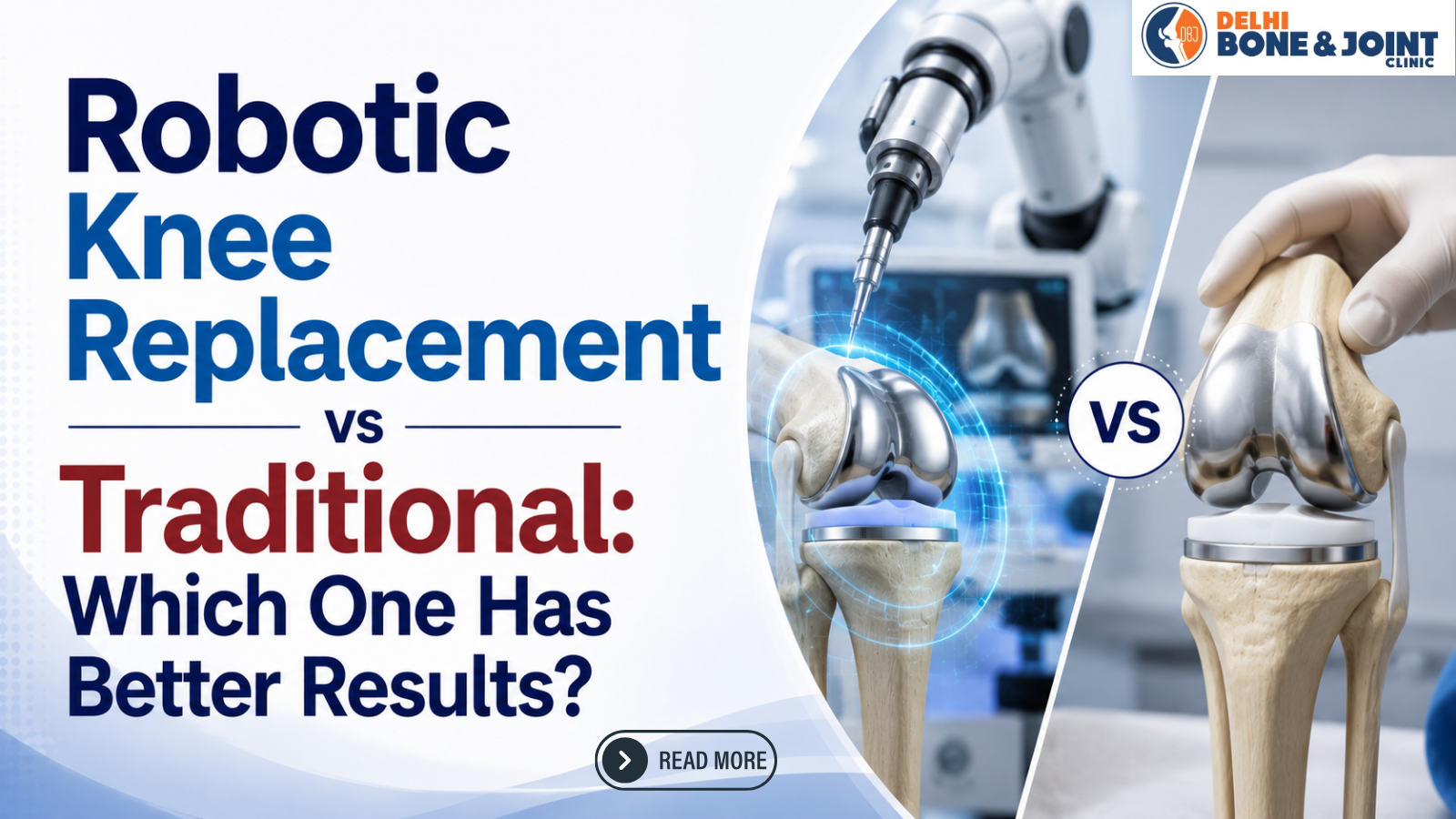
Traditional knee replacement has been performed successfully for decades. The surgeon uses their skill, experience, and standard surgical instruments to remove damaged cartilage and bone, then fits an artificial implant based on measurements taken during the procedure itself.
Robotic-assisted knee replacement uses a 3D model of your knee, built from pre-surgery scans, to guide the surgeon with millimeter-level precision. The robot doesn't operate on its own — think of it more like a highly advanced GPS guiding an experienced driver, rather than a self-driving car. The surgeon is still fully in control every step of the way.
Precision: The Biggest Talking Point
This is where robotic surgery gets most of its attention. Because the procedure is mapped out digitally beforehand, the implant can be positioned with a level of accuracy that's difficult to match manually every single time. Even small misalignments in traditional surgery — sometimes just a couple of degrees — can affect how naturally the knee moves afterward.
That said, an experienced traditional surgeon with years of hands-on practice can still achieve excellent alignment. Precision isn't only about technology; it's also about expertise, which is why choosing the Best Orthopaedic Surgeon in Janakpuri matters just as much as choosing the technique itself.
Recovery Time and Pain Levels
Many patients report slightly less post-operative pain and a quicker return to normal movement with robotic surgery, largely because the procedure tends to be less disruptive to surrounding tissue. However, recovery still depends heavily on the patient's age, weight, overall health, and how sincerely they follow post-surgery physiotherapy.
Traditional surgery patients recover very well too — the difference in recovery speed is often smaller in real life than marketing material suggests. What actually accelerates healing in both cases is working closely with the Best Knee Replacement Surgeon in Janakpuri. And sticking to the prescribed rehabilitation plan.
Long-Term Results
Here's the truth: both techniques have strong long-term success rates, often lasting 15–20 years or more with proper care. Robotic surgery may offer a slight edge in implant longevity due to more accurate positioning, which reduces uneven wear over time. But traditional replacements performed by skilled hands have stood the test of time for decades and continue to deliver excellent, long-lasting outcomes for the vast majority of patients.
Cost Considerations
Robotic knee replacement typically costs more than the traditional method, largely due to the technology and equipment involved. For some patients, especially those with complex knee deformities or previous injuries, the added precision may be worth the investment. For others with a fairly standard case, traditional replacement performed by an experienced surgeon can deliver equally reliable results at a lower cost.
This is exactly why the decision shouldn't be made purely based on trends — it should come from a detailed discussion with the Best Orthopaedic Surgeon in Janakpuri. who can evaluate your specific knee condition, bone structure, and lifestyle needs before recommending either approach.
So, Which One Should You Choose?
There's no universal "better" option — only what's better for your knee. Robotic surgery tends to be recommended for:
Complex deformities or previous knee injuries
Patients wanting maximum precision in implant alignment
Those willing to invest a bit more for potentially faster early recovery
Traditional surgery remains an excellent choice for:
Patients with straightforward, uncomplicated knee arthritis
Those looking for a more cost-effective, well-established option
Cases where a highly experienced surgeon's hands-on expertise is the priority
The real deciding factor isn't robotic versus traditional — it's finding the right surgeon who can honestly assess your knee and guide you toward the option that fits your body, budget, and lifestyle. That's why patients across Delhi frequently consult the Best Knee Replacement Surgeon in Janakpuri. Before making this decision, consider that a personalized evaluation matters far more than the technique's branding.
The Bottom Line
Both robotic and traditional knee replacement can give you your mobility and confidence back. Robotic surgery offers enhanced precision and, in many cases, a slightly smoother early recovery, while traditional surgery continues to deliver dependable, long-lasting results in experienced hands. Rather than getting caught up in which method sounds more advanced, focus on consulting the Best Orthopaedic Surgeon in Janakpuri. who can walk you through imaging, your knee's condition, and realistic expectations for either path. The right surgeon, more than the technology, is what truly determines how well your new knee will serve you for years to come.
FAQs
1. Is robotic knee replacement more painful than traditional surgery?
No, it's often less disruptive to tissue, which may mean slightly less pain.
2. Does robotic surgery mean the robot operates alone?
No, the surgeon controls the entire procedure; the robot only assists with precision.
3. Which lasts longer, robotic or traditional implants?
Both last 15–20+ years; robotics may offer slightly better long-term alignment.
4. Is robotic knee replacement suitable for everyone?
Most patients qualify, but complex cases benefit from it the most.
5. How do I decide which surgery is right for me?
A detailed evaluation with an experienced knee surgeon is the best way.