
Is Your Office Chair Destroying Your Spine? | Expert Orthopaedic Advice
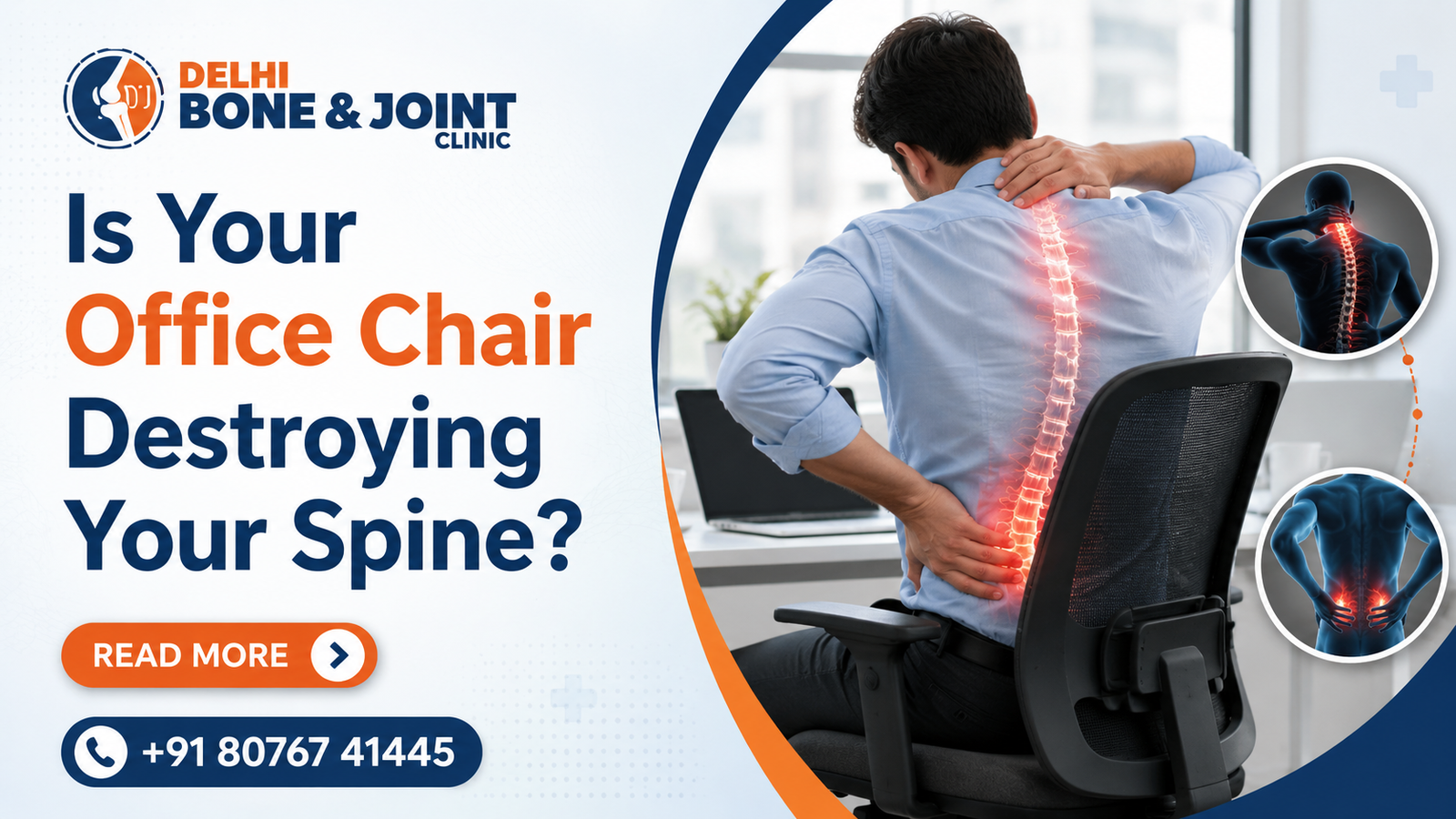
Is Your Office Chair Destroying Your Spine? | Expert Orthopaedic Advice
Introduction
You clock in, sit down, and spend the next eight to ten hours glued to your screen. It feels harmless — after all, you're just sitting. But here's the uncomfortable truth: your office chair may be doing more damage to your spine than a strenuous workout ever could.
Back pain is now one of the leading causes of disability worldwide, and a significant portion of it is directly linked to prolonged, poor-quality sitting. Whether you work from a corporate office or your living room couch, understanding the relationship between your chair and your spine could save you years of pain, costly treatments, and irreversible damage.
How Sitting Affects Your Spine
The human spine is designed for movement, not static posture. It has a natural S-shaped curve — a cervical curve in the neck, a thoracic curve in the mid-back, and a lumbar curve in the lower back. When you sit incorrectly — slouched, hunched, or leaning forward — this natural alignment is compromised.
Here's what happens inside your body when you sit for extended periods:
- Increased disc pressure: Sitting puts roughly 40% more pressure on your lumbar discs than standing. Over time, this leads to disc compression and degeneration.
- Muscle imbalance: Prolonged sitting tightens the hip flexors and weakens the glutes and core muscles, which are critical for spinal support.
- Reduced blood flow: Static posture restricts circulation to the spinal tissues, slowing nutrient delivery and waste removal.
- Nerve compression: Poor lumbar support can cause the sciatic nerve to become compressed, leading to pain that radiates from the lower back down the legs.
Signs Your Chair Is Hurting You
Many people dismiss early warning signs as "just tiredness." Don't. Here are red flags that your chair — and your sitting habits — are damaging your spine:
- Morning stiffness that takes over 30 minutes to ease after waking up
- Chronic lower back ache that gets worse throughout the workday
- Neck and shoulder tension that builds by midday
- Tingling or numbness in your hands, legs, or feet
- Frequent headaches originating from the base of the skull
If you're experiencing any of these symptoms consistently, consulting the Best Orthopaedic Surgeon in Janakpuri is a smart and proactive step before the damage becomes structural.
What Makes an Office Chair "Spine-Friendly"?
Not all ergonomic chairs are created equal. Here's what to look for:
1. Lumbar Support
The chair must support the natural inward curve of your lower back. Without this, the lumbar spine flattens, leading to disc stress.
2. Seat Height & Depth
Your feet should rest flat on the floor with your knees at a 90-degree angle. Seat depth should allow a two-to-three finger gap between the back of your knee and the seat edge.
3. Armrest Positioning
Armrests should allow your shoulders to relax, not hunch upward. Incorrect armrests shift tension directly to the cervical spine.
4. Backrest Recline
A slight recline of 100–110 degrees reduces lumbar disc pressure more than sitting bolt upright.
5. Seat Material
Firm but cushioned support distributes weight evenly. Overly soft chairs may feel comfortable initially, but cause the pelvis to tilt backwards, distorting the entire spinal curve.
Beyond the Chair: Habits That Protect Your Spine
Even the best chair won't save you if your habits are damaging. Combine good furniture with these evidence-based practices:
- Follow the 30/30 rule: Stand or walk for at least 5 minutes every 30 minutes of sitting.
- Set a screen at eye level to prevent neck flexion and forward head posture.
- Strengthen your core: Exercises like planks, bird dogs, and pelvic tilts build the muscular foundation your spine relies on.
- Stretch daily: Target the hip flexors, hamstrings, thoracic spine, and neck.
- Hydrate adequately: Spinal discs are largely water-based. Dehydration accelerates disc degeneration.
If you've already developed persistent or radiating pain, don't rely solely on stretching and posture correction. Seek the guidance of the Best Bone Specialist in Janak Puri to rule out disc herniation, spondylosis, or other structural conditions that require medical management.
When to See a Doctor
Mild discomfort can often be managed with posture correction and exercise. But certain symptoms demand professional attention:
- Pain lasting more than six weeks
- Pain that radiates below the knee
- Weakness or loss of sensation in the legs
- Bladder or bowel changes alongside back pain (seek emergency care immediately)
These could indicate serious conditions — herniated discs, spinal stenosis, or nerve damage — that worsen without intervention. The Best Orthopaedic Surgeon in Janakpuri can assess your condition through physical examination and imaging, and recommend non-surgical or surgical options based on the severity.
The Bigger Picture: Invest in Your Spine Now
Think of your spine as your body's central highway. Every signal your brain sends to your limbs, organs, and muscles travels through it. Neglecting spinal health to save money on a better chair — or to avoid a doctor's visit — is a short-term decision with long-term consequences.
Ergonomic chairs, movement breaks, and core strengthening are excellent preventive tools. But if damage has already begun, early diagnosis and treatment from the Best Bone Specialist in Janak Puri can prevent a manageable problem from becoming a chronic condition that limits your quality of life.
Your back carries you through every day of your life. It's time to return the favour.
Frequently Asked Questions (FAQs)
Q1. How many hours of sitting are considered harmful for the spine?
Sitting for more than 6–8 continuous hours daily — especially without movement breaks — significantly increases the risk of disc degeneration, poor posture, and chronic back pain.
Q2. Can an ergonomic chair completely prevent back problems?
A good ergonomic chair greatly reduces spinal stress, but it is not a complete solution. Regular movement, core strengthening, and proper posture habits are equally important.
Q3. What is the correct sitting posture for spine health?
Sit with your back fully supported by the chair's lumbar region, feet flat on the floor, knees at 90 degrees, and the screen at eye level to maintain the spine's natural S-curve.
Q4. When should I consult a doctor for office-related back pain?
If back pain persists for more than 4–6 weeks, radiates into the legs, or is accompanied by numbness or tingling, consult a specialist promptly. Early diagnosis prevents further damage.
Q5. Is back pain from sitting reversible?
In most early-stage cases, yes — with posture correction, physiotherapy, and lifestyle changes. Advanced disc degeneration or structural damage may require medical or surgical intervention.
Disclaimer: This blog is for informational purposes only and does not constitute medical advice. Please consult a qualified healthcare professional for diagnosis and treatment.