
Best Sleeping Positions After Joint Replacement Surgery
Best Sleeping Positions After Joint Replacement Surgery
Anyone who's been through a hip or knee replacement will tell you the same thing — the surgery itself often feels easier than getting through the first few nights afterward. You're finally home, the swelling hasn't gone down yet, and every time you shift in bed, you're terrified of moving the wrong way. Sleep, which used to be the easiest part of the day, suddenly feels like a puzzle.
The truth is, how you sleep after joint replacement surgery matters almost as much as your physiotherapy. The right position protects your new joint, reduces swelling, and helps you actually rest instead of tossing around in discomfort all night. Let's walk through what works best.
Why Sleep Position Matters So Much After Surgery
In the first few weeks after surgery, your joint is healing, the surrounding muscles are weak, and swelling is at its peak. Sleeping in the wrong position can put pressure on the new joint, increase pain, or, in the case of hip replacements, even risk dislocation. Getting this right isn't about being extra cautious — it genuinely speeds up recovery and helps you avoid unnecessary setbacks.
Best Sleeping Positions After Hip Replacement
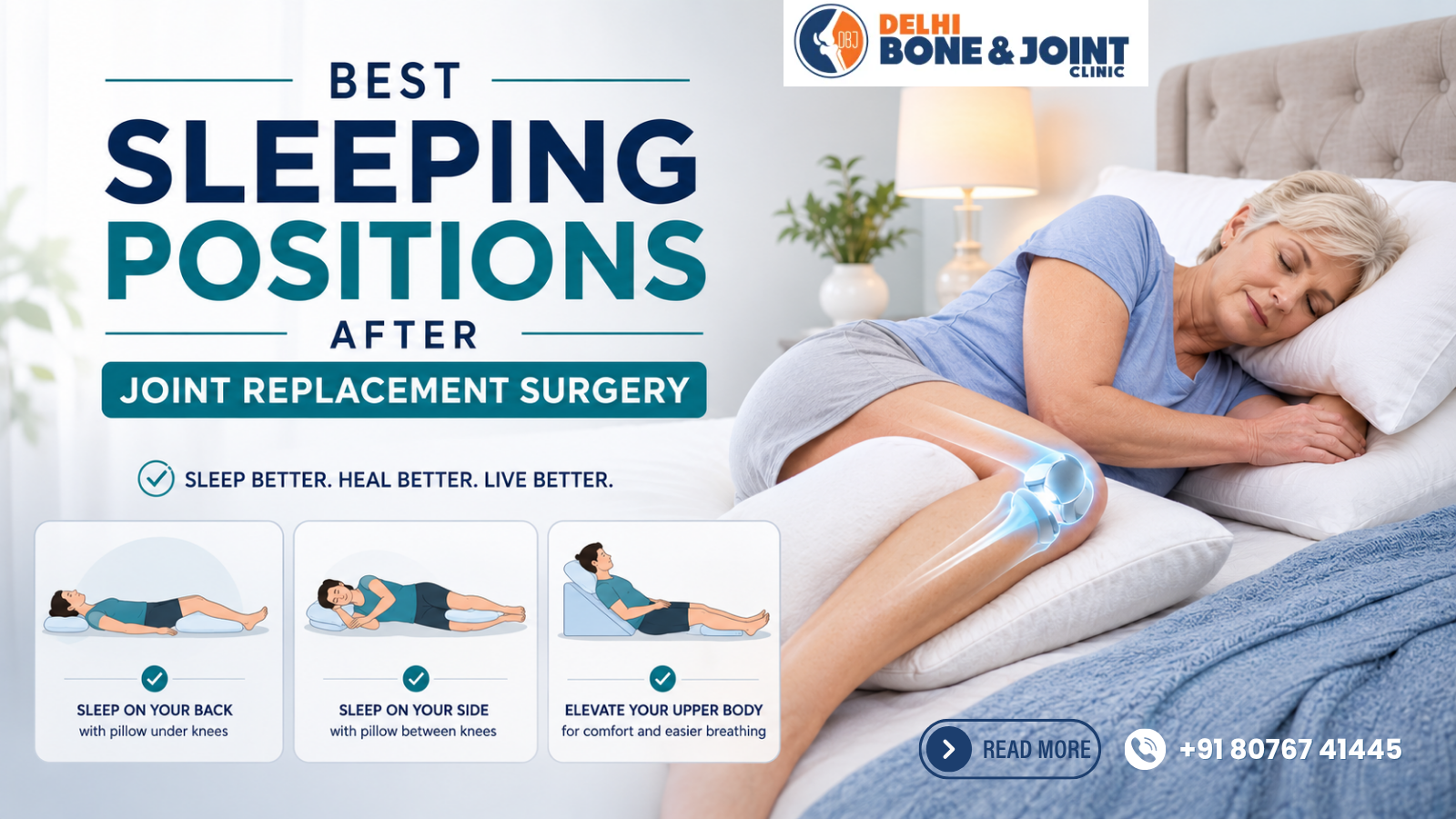
1. Sleep on your back with a pillow between your knees.s This is the safest position in the first several weeks. Lying flat on your back keeps your hip in a neutral position and prevents you from accidentally crossing your legs while asleep. Placing a pillow between your knees adds extra support and keeps your hips aligned.
2. Sleep on your non-operated side (only when your surgeon approves). Once your surgeon gives the go-ahead, usually after a few weeks, you may be able to sleep on your unaffected side. Always keep a pillow between your knees to prevent the operated leg from rotating inward.
3. Avoid sleeping on your stomach. Stomach sleeping twists the hip joint and puts unnecessary strain on it. It's best avoided until your surgeon confirms it's safe, which is usually much later in recovery, if at all.
Best Sleeping Positions After Knee Replacement
1. Back sleeping with the knee slightly elevated. Keep your operated leg elevated on a pillow, but avoid placing a pillow directly under the knee for long periods, as this can lead to stiffness. Instead, support the calf and heel so the knee stays in a natural, straight position.
2. Side sleeping with a pillow between the legs.s Similar to hip surgery, sleeping on your side with a pillow between your knees reduces pressure on the operated joint and keeps your spine aligned too.
3. Avoid fully bending the knee while sleeping. Curling the operated leg tightly can cause stiffness and slow down your range-of-motion recovery. Keep the leg as straight and relaxed as possible.
Tips to Make Nights More Comfortable
Use multiple pillows strategically — under the knee, between the legs, or behind the back for support, not just for comfort.
Elevate the operated leg slightly during the first week or two to help control swelling.
Set a gentle alarm to reposition every couple of hours in the early days, since staying in one position too long can cause stiffness.
Keep pain medication on schedule in the evening so discomfort doesn't wake you up repeatedly at night.
Use a firm mattress or a mattress topper if your existing bed is too soft, since sinking in can strain the new joint.
When Sleep Trouble Signals Something More
Occasional discomfort at night is expected, but if you notice increasing swelling, warmth around the joint, sudden sharp pain, or a feeling that the joint has shifted, it's important to get it checked immediately rather than waiting it out. This is exactly the kind of concern patients bring to the Best Orthopaedic Surgeon in Janakpuri, since early evaluation can prevent a minor issue from becoming a major setback.
Building a Recovery-Friendly Sleep Routine
Recovery isn't just about the surgery — it's about the weeks that follow, and sleep plays a bigger role in healing than most people realize. Poor sleep slows tissue repair and increases pain sensitivity, which is why getting your sleeping position right is genuinely part of your treatment plan, not just a comfort measure. Many patients recovering from hip or knee surgery consult the best joint replacement doctor in Janakpuri. Specifically, to get a personalized positioning and recovery plan based on their surgery type and healing progress.
If you're unsure which position suits your specific surgery, don't rely on generic advice alone — every patient's anatomy and recovery timeline is different. A quick check-in with the Best Orthopaedic Surgeon in Janakpuri can help you avoid positions that may strain your new joint. Similarly, the best joint replacement doctor in Janakpuri. can guide you on exactly when it's safe to transition from back sleeping to side sleeping, based on your individual healing pace.
The Bottom Line
Getting good sleep after joint replacement surgery isn't just about comfort — it directly supports how well and how quickly your new joint heals. Stick to back sleeping with proper pillow support early on, avoid stomach sleeping, and don't rush into side sleeping until you're cleared. And if anything feels off at night, it's always worth reaching out to the Best Orthopaedic Surgeon in Janakpuri, the best joint replacement doctor in Janakpuri. Rather than waiting it out. A few mindful nights now can mean a much smoother recovery ahead.
FAQs
1. Can I sleep on my side after hip replacement?
Only once your surgeon approves, usually with a pillow between your knees.
2. Is stomach sleeping ever okay after surgery?
Generally not recommended until much later in recovery, if at all.
3. How long should I sleep on my back after surgery?
Typically for the first few weeks, until your surgeon advises otherwise.
4. Why does my joint feel stiff in the morning?
Staying in one position too long overnight can cause temporary stiffness.
5. When should I worry about night-time joint pain?
If pain, swelling, or warmth suddenly increases, seek medical advice right away.