
Shoulder Replacement Surgery: When It’s Needed, Implant Types & Recovery
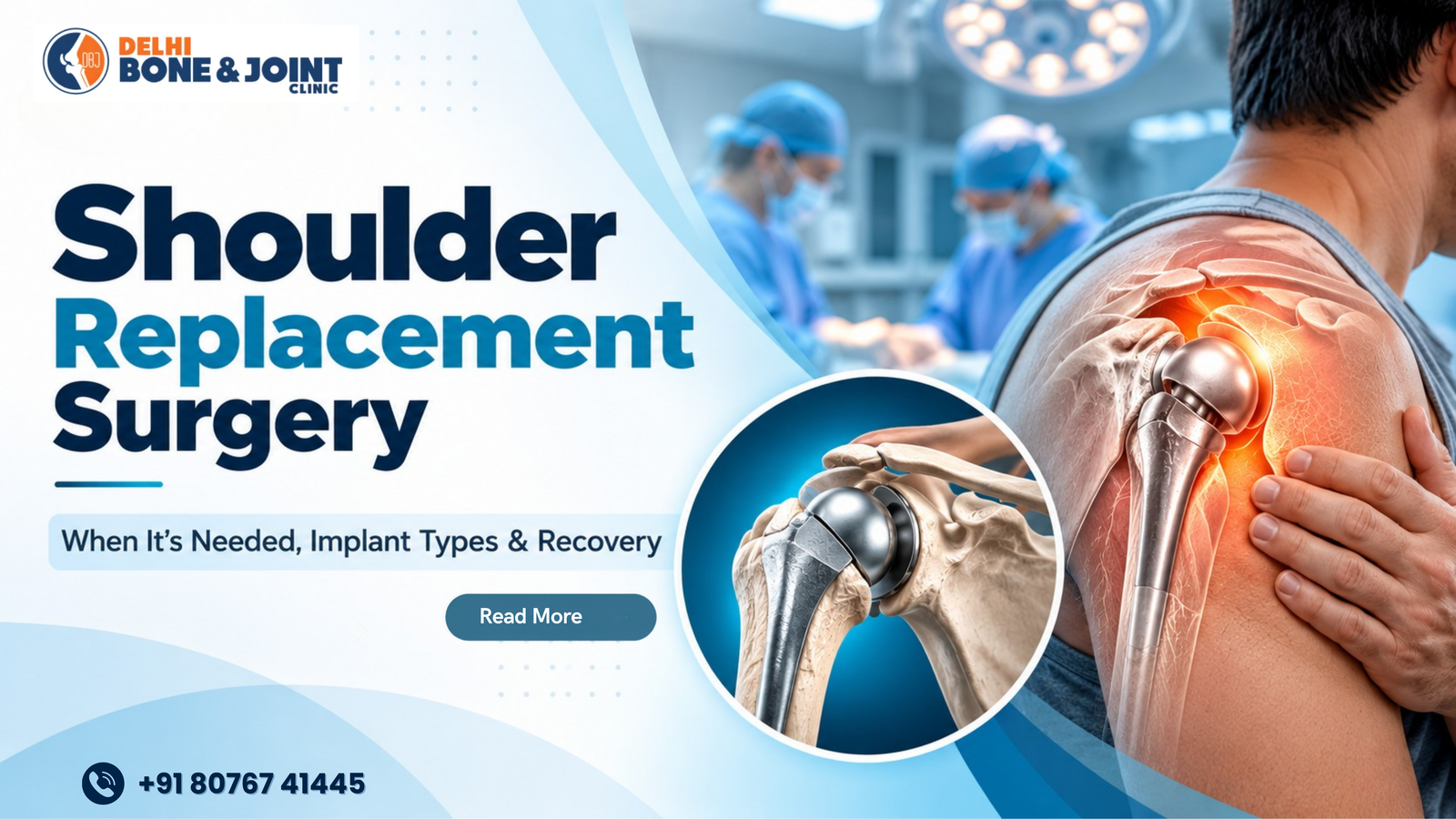
Shoulder Replacement Surgery: When It’s Needed, Implant Types & Recovery
Introduction
Reaching for a shelf, combing your hair or turning in bed at night can become painful when the shoulder joint wears out. Many people live with it for years, hoping it will settle. According to the Best Shoulder Replacement Surgeon in Janakpuri, replacement is considered only after other treatments have been tried, but when needed it can restore comfort and movement.
How Does the Shoulder Work?
The shoulder is a ball-and-socket joint that allows the widest range of motion in the body. Smooth cartilage lets the ball glide inside the socket. When cartilage wears away or the bone is damaged, movement becomes painful and stiff.
The Best Orthopaedic Surgeon in Janakpuri, explains that the right type of replacement depends on the condition of your bone and rotator cuff muscles.
Common Reasons for Replacement
- Severe osteoarthritis of the shoulder
- Rheumatoid arthritis
- Avascular necrosis, where the bone loses blood supply
- Complex fractures of the upper arm bone
- Arthritis linked to a long-standing rotator cuff tear
- Failed earlier surgery in selected cases
Signs You May Need Surgery
- Constant shoulder pain, even at rest or at night
- Difficulty lifting the arm or doing daily tasks
- Grinding or stiffness that keeps worsening
- Poor relief from medicines, injections and physiotherapy
- Loss of sleep due to pain
Types of Shoulder Replacement
- Total (anatomic) shoulder replacement: replaces the ball and socket in their natural arrangement
- Partial replacement: replaces only the ball in selected cases
- Reverse shoulder replacement: switches the position of the ball and socket, useful when the rotator cuff is badly damaged
What Happens During Surgery?
The operation is done under anaesthesia, often with a nerve block to reduce pain afterward. The damaged surfaces are removed and the implant is fitted. Most patients stay in hospital for a short period.
The Best Orthopaedic Surgeon in Janakpuri, advises a full assessment, including scans, before choosing the implant type.
Recovery Timeline
- First weeks: sling support and gentle guided movements
- Around 6 weeks: gradual strengthening begins
- 3 to 6 months: major improvement in comfort and function
- Up to a year: continued gains in strength
Tips for a Smooth Recovery
- Wear the sling as advised
- Follow the physiotherapy plan every day
- Avoid lifting heavy objects until cleared
- Keep the wound clean and dry
- Control diabetes and stop smoking before surgery
- Arrange help at home for the first weeks
Possible Risks
As with any surgery, risks include infection, stiffness, implant loosening or nerve injury. These are discussed beforehand and are reduced by proper technique and rehabilitation.
Conclusion
Shoulder replacement can end years of pain for the right patient. Consult Dr. Aashish Taneja at Orthopedic & Joint Replacement Clinic, Janakpuri, New Delhi, or call +91 80767 41445. Choosing the Best Orthopaedic Surgeon in Janakpuri, helps you get the right implant, safe surgery and a clear recovery plan.
FAQs
- How long does a shoulder implant last?
Often 10 to 20 years, depending on use and bone quality.
- Is the surgery very painful?
Pain is managed with medicines and nerve blocks.
- When can I drive again?
Usually after several weeks, as your surgeon advises.
- What is reverse shoulder replacement?
An implant that reverses ball and socket, used when the rotator cuff is damaged.
- Is physiotherapy necessary?
Yes, it is key to a good result.