
Knee Replacement Surgery Explained: When It Is Needed, How It Works, Recovery Timeline and Tips for a Faster Return to Walking
Knee Replacement Surgery Explained: When It Is Needed, How It Works, Recovery Timeline and Tips for a Faster Return to Walking
Knee pain that makes climbing stairs, walking to the market, or even sleeping difficult is more than an inconvenience. When medicines, exercise, and injections stop helping, joint replacement can give you your life back. According to the Best Knee Replacement Surgeon in Janakpuri, knowing when to operate is as important as how to operate.
Why Do Knees Wear Out?
- Osteoarthritis, the most common cause
- Rheumatoid arthritis
- Old fractures or ligament injuries
- Obesity, which adds stress to the joint
- Age-related cartilage loss
The Best Knee Replacement Surgeon in Janakpuri explains that once cartilage is badly worn, bone rubs on bone and pain becomes constant.
Signs You May Need Replacement
- Pain that persists even at rest or at night
- Difficulty walking short distances or climbing stairs
- Stiffness and swelling that do not improve
- Visible bowing of the knee
- Little relief from medicines, physiotherapy or injections
What Happens During Surgery?
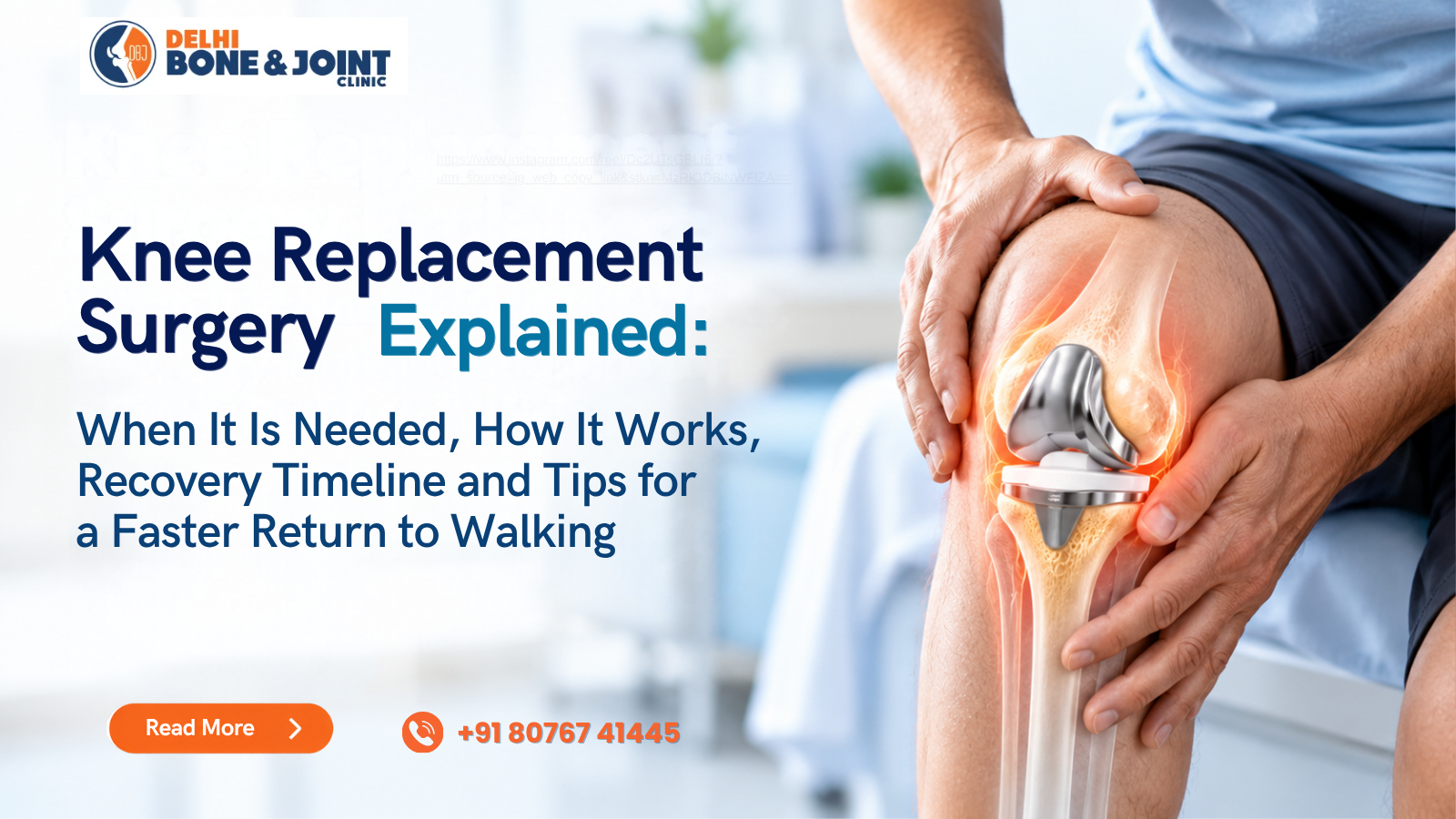
The damaged surfaces of the knee are removed and replaced with a metal and medical-grade plastic implant. Modern techniques, including minimally invasive and robotic-assisted options where suitable, aim for precise alignment, less pain and faster recovery.
Recovery Timeline
- Day 1: Standing and walking with support
- Weeks 1 to 2: Walker or stick, wound healing and exercises
- Weeks 4 to 6: Most daily activities resume
- 3 months: Strength and stability improve greatly
The Best Knee Replacement Surgeon in Janakpuri stresses that physiotherapy after surgery is essential for a good result.
Tips for a Smooth Recovery
- Follow the exercise plan every day
- Keep the wound clean and dry
- Control diabetes and blood pressure
- Maintain a healthy weight
- Avoid heavy impact activities like running
Is Delay Harmful?
Waiting too long can lead to deformity, muscle weakness, and more difficult surgery. Early consultation helps you choose the right time.
Conclusion
Knee replacement is one of the most successful surgeries for restoring pain-free movement. Consult Dr. Aashish Taneja at Orthopedic & Joint Replacement Clinic, Janakpuri, New Delhi, or call +91 80767 41445. Choosing the Best Knee Replacement Surgeon in Janakpuri helps you move confidently again.
FAQs
- How long does a knee implant last?
Commonly 15 to 20 years or more, depending on use.
- Is knee replacement painful?
Some pain is expected, but modern pain management keeps it controlled.
- When can I walk after surgery?
Usually the same day or the next day, with support.
- Can both knees be done together?
In selected patients, yes.
- Is physiotherapy necessary?
Yes, it is key to a good outcome.